(Not) Getting By reflects the ways people adapt, endure, and reshape their lives in order to keep going. For many truck drivers, the job is a means of providing, of holding life together across distance. Within a profession shaped by long-standing norms and expectations, drivers find their own ways of navigating the road, balancing work, home, and identity.
This theme looks at what people do to get by: the compromises they make, the strength they draw on, the support they seek. It also turns toward moments of change, when enduring is no longer enough and continuing requires a different path. (Not) Getting By frames leaving not as defeat, but as renewal—opening space for new roles, new rhythms, and new definitions of success when the road no longer offers a way forward.
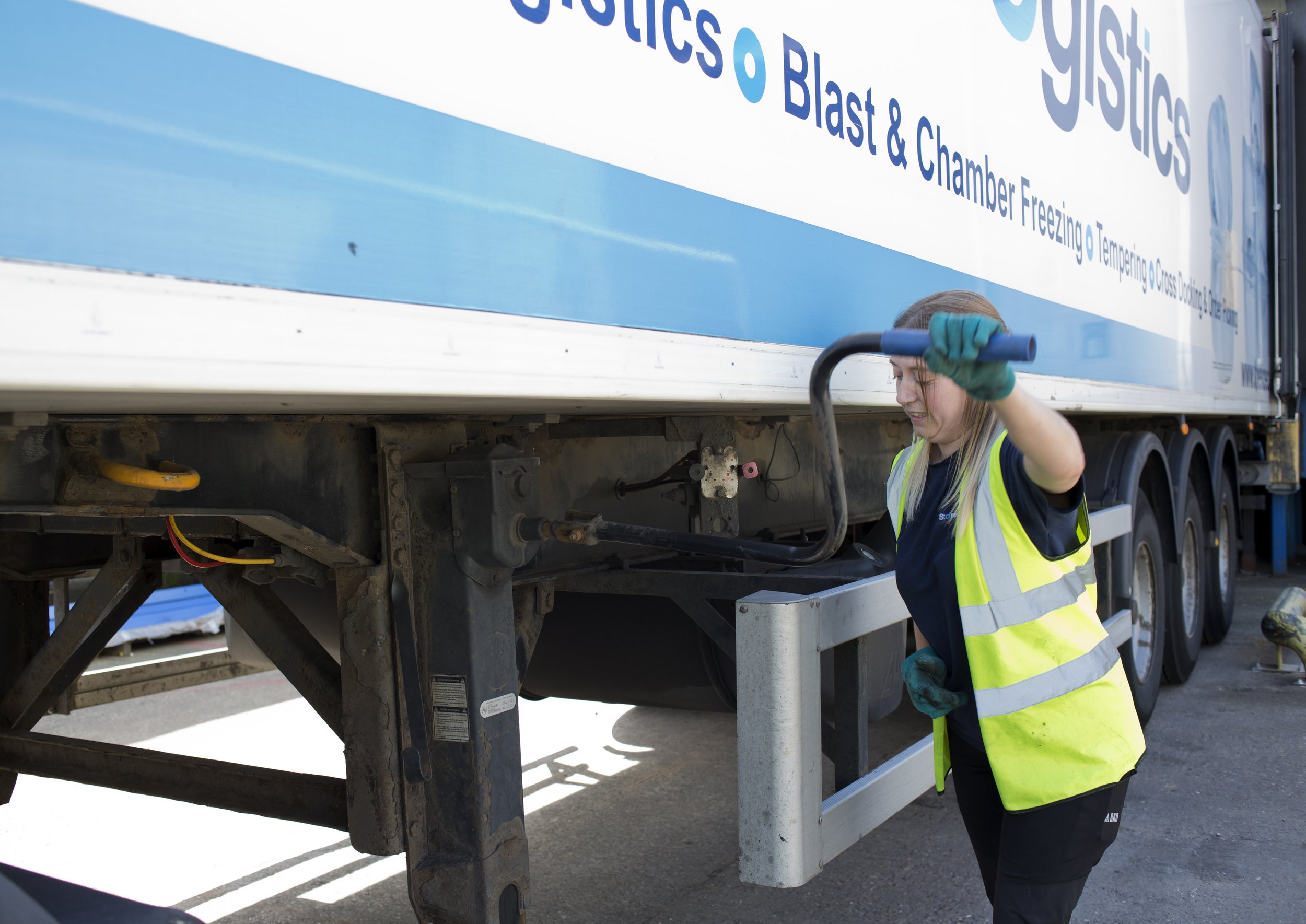
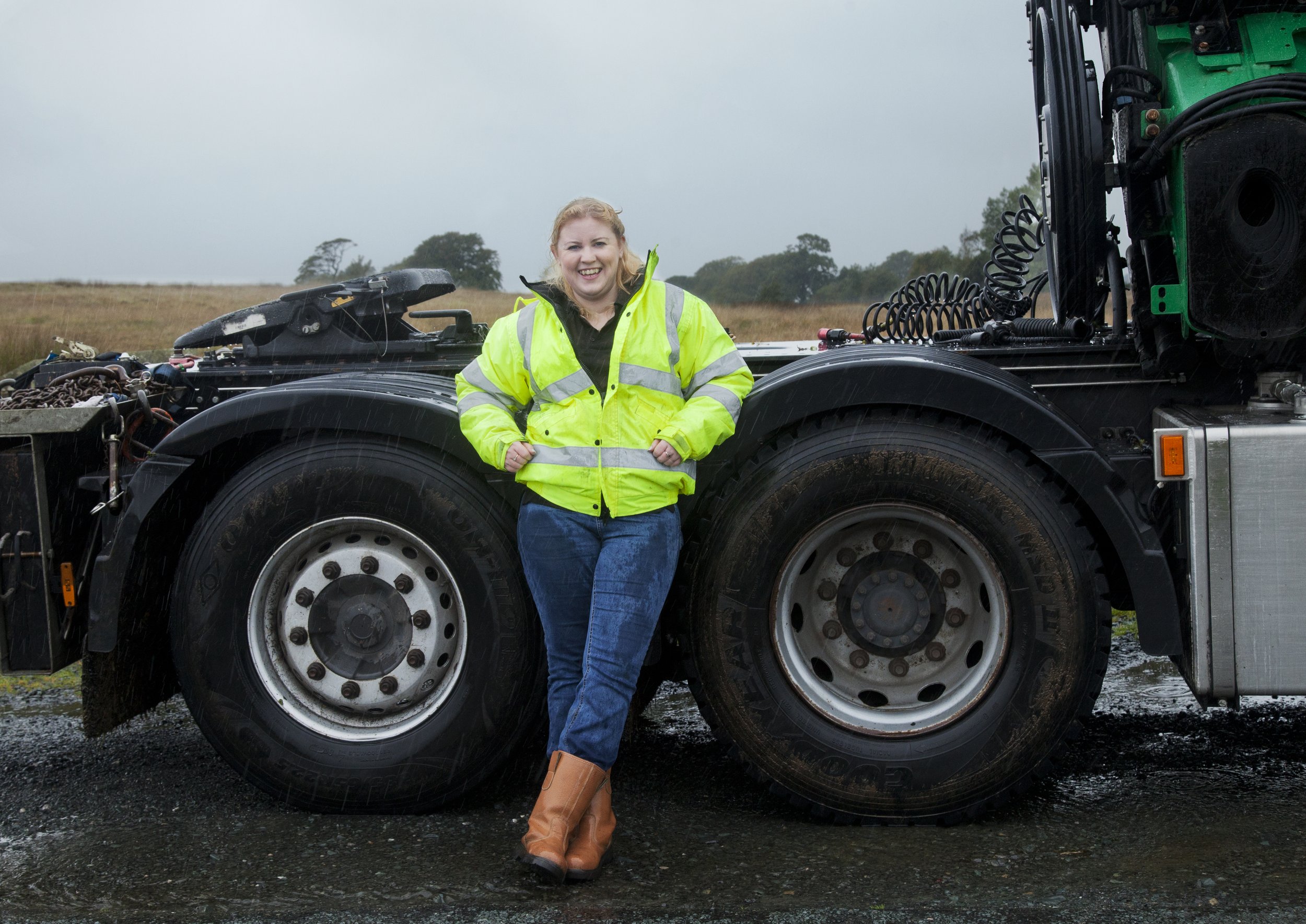
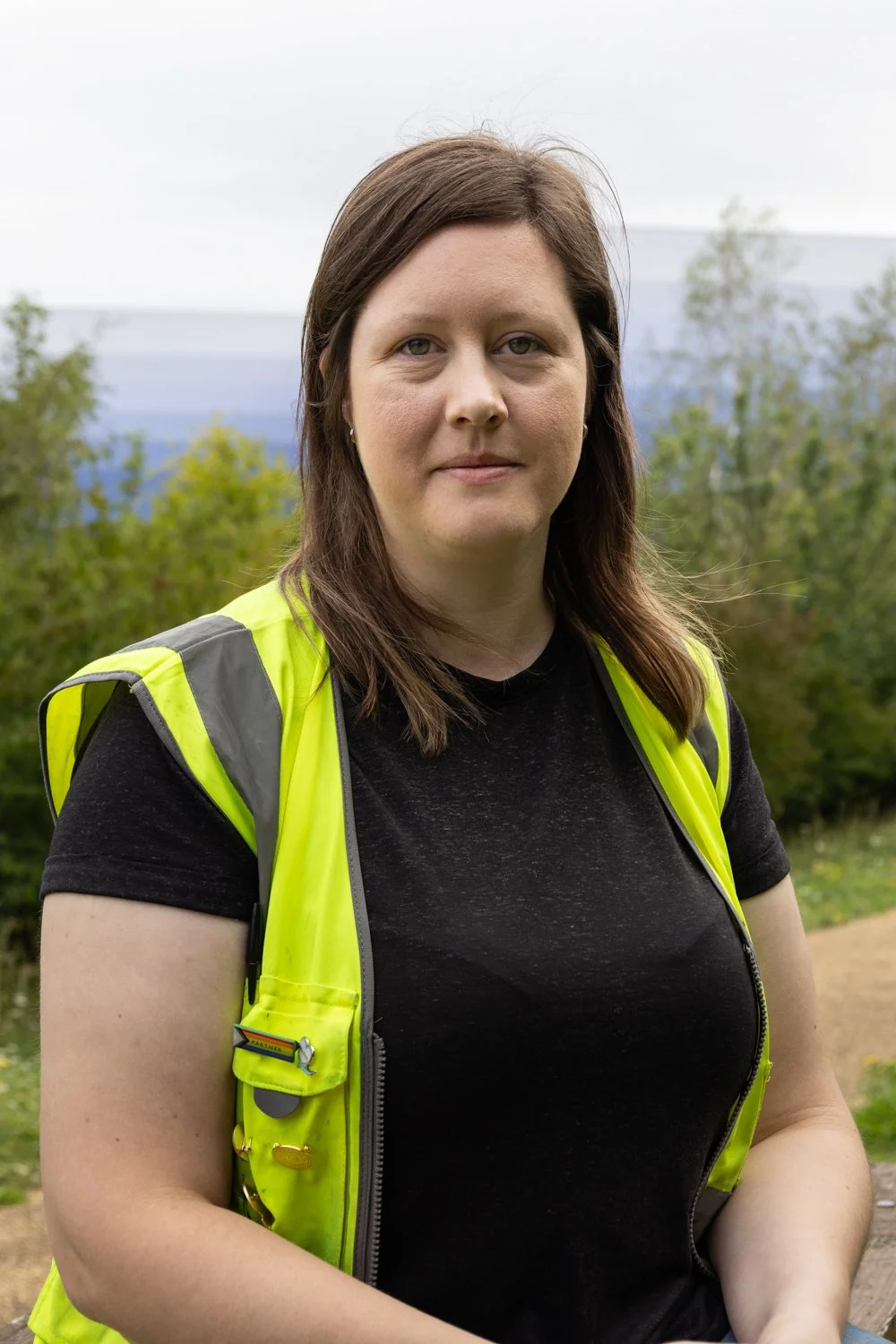
“Trucking on the surface and to the general public may appear to be, that all we do is drive and we’re just steering wheel attendants but as soon as my career began, I realised that this just isn’t the case. We have stock to move, curtains to pull and equipment outside the truck to use. It can be quite physically demanding in some parts of the industry.
Being a female is also very different and you really do have to adapt in to this ‘man’s world. I would advise anyone looking into this career to be quite ‘thick skinned’. Don’t get me wrong, a lot of our male counter parts are helpful and friendly, but others are not. You have to be prepared for derogatory comments, sexists remarks, along with unsolicited ‘mansplaining’ advice.’ I’ve become quite sarcastically funny with my personality through it and never take anyone or anything too seriously, as you can see from some of the items in my truck, and I even refer to myself as the dizzy blonde to get in front of the ‘banter.’
Despite this though, it is extremely rewarding and I love my job. I feel it is very empowering and most people find it extraordinary when I say what my job is. I really hope more women come in to the industry in the future and hopefully businesses and other related organisations will start to adapt and make our lives in this job just that bit more palatable; I would just love a clean toilet every now and then =)”
Laura Rose
Photo credit: Holly Revell
“I worked until I was 8 months pregnant. Unfortunately, the job changed as soon as I had my son and the places I was always going to had stricter restrictions with passengers and loads etc. This then meant my son could no longer come with me/us, and there are no nurseries open at 4am in the morning to drop him off for me to do a full day’s work. There was also as much as it was a ‘day job’ there was no guarantee I would be home at night (stuck in traffic, crash, delay in load being ready etc.) I also did not want to leave my son as he was breast fed. All of these reasons put a massive restriction on women drivers as mothers. I could no longer work as a truck driver. I hope to get back to it one day”
Emma Williams
Photo credit: Holly Revell
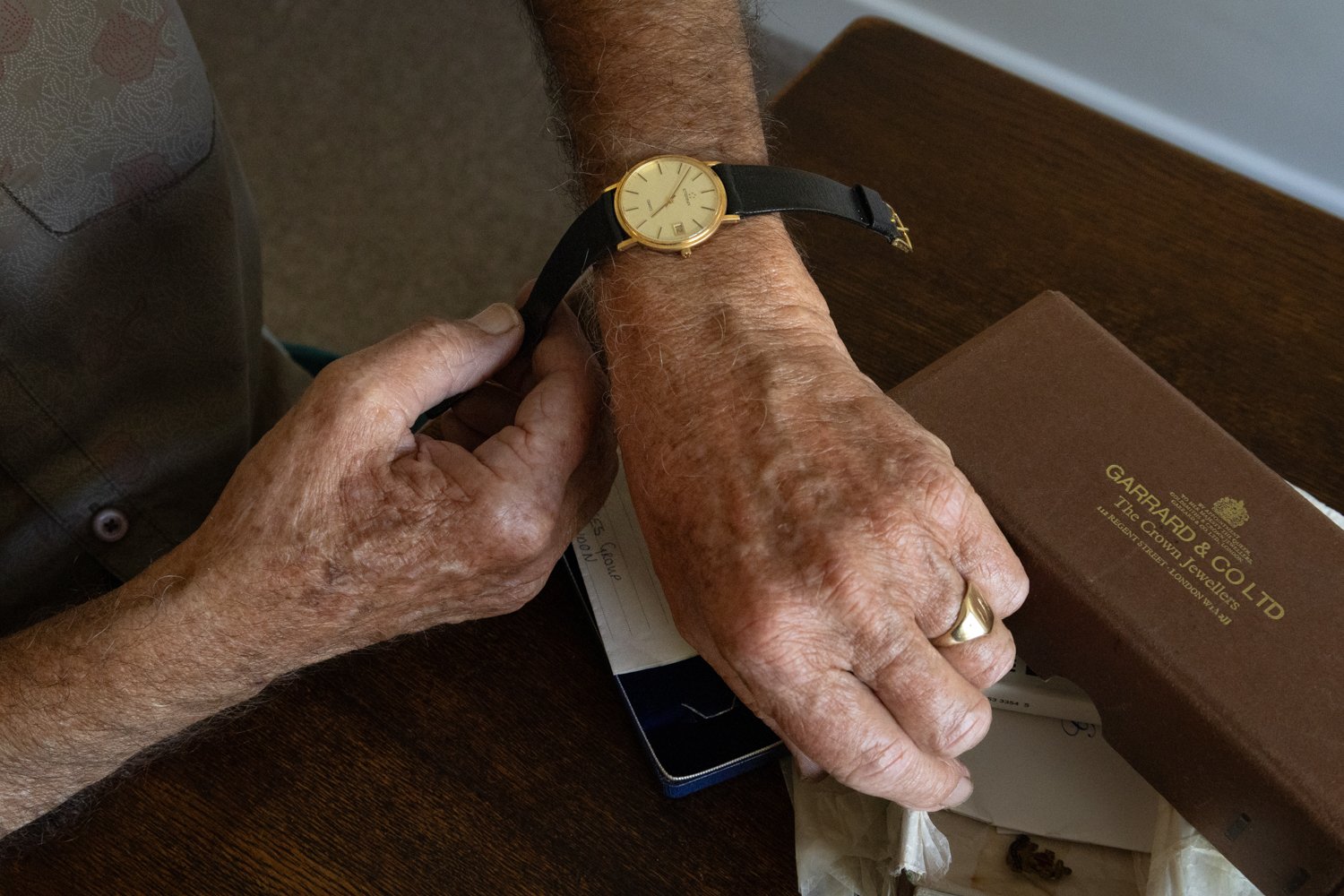
In Brian Pollard’s garage today, the remainders of his working life - including that as a van and truck driver - at Wholesale Fruit and Veg Co. still remain: the uniform (still a perfect fit), the wooden banana box, his trolley, the gold watch for twenty-five years’ service, and photographs of the team. The colour in the prints have softened with time, but his memory of each person has not. He names them without pause, recalling their voices, their laughter, the quiet camaraderie of the road.
Everything is kept where he can see it. Not because he lives in the past, but because those years were good years, full of motion, purpose, and a freedom he can still feel in his chest if he closes his eyes.
Brian’s life on the road was never just about getting from one place to another. It was about belonging. It was about the quiet pride of being part of something bigger. And it was about knowing, at the end of each day, that you had gone the distance.
Text and photo credit: Melanie Pollard
Brian Pollard
Emma Foster-Smith is a long-haul driver for a major UK retailer, a wife, and a mother of two young children. She’s also a painter, bookbinder, and someone whose home feels as warm and lived-in as her stories. A piano stands in the corner, sheet music scattered across it. Her own prints hang proudly on the walls, and stacks of hand-bound books wait for their next owner.
Over coffee, Emma speaks candidly about how motherhood changed her relationship with the road. “Before I became a mother I wasn’t worried about anything really. I drove without concerns”. During pregnancy, Emma drove until the five-month mark before switching to office work. She returned with flexible hours a gesture she appreciated but something had shifted. “I started to feel fear. Not just for me, but because I had these little people who depended on me. For the first time, I questioned my mortality. I was scared of not making it home.”
Her driving changed. Everything on the road seemed “too big, too fast.” She became hyper-aware of how little thought many drivers gave to stopping distances, how casually they took risks. And in that heightened state of awareness, trauma struck.
Emma’s PTSD (post-traumatic stress disorder) diagnosis followed after she witnessed a fatality, then two further incidents within three weeks. “One was when someone had jumped from a bridge,” she tells me quietly. “I saw the police shining a torch onto the ground...and I could see the mess. I couldn’t look away. That one stayed with me.” The second happened at 5:30 one morning. She remembers the police officer holding up a sheet, a Mini parked in the lay-by. “I couldn’t work out who it was. Had someone jumped? Was it the truck driver?” For Emma, the impact of these incidents cut deeper than she could have imagined. “The hardest part was how it affected my parenting,” she says. “I knew I had to focus on emotional regulation, not just for me, but for my kids. I want them to grow up knowing how to ask for help, to express how they feel.”
Her employer stepped in, offering therapy and a gradual return through exposure, driving the same routes, listening to the same songs that had played during those traumatic moments. Her experiences helped spark a broader mental health initiative in her company, a recognition that trauma behind the wheel is far more common than many realise. “I don’t have a problem now,” she says. “PTSD doesn’t rule me anymore. But it can still creep up, especially with how people drive these days. Fast, reckless, no understanding of the space we need to stop. If you try to be safe, people get impatient. That really gets to me.”
Spending time with Emma reminded me that our roads are navigated by human beings, not machines. Behind every truck is someone’s parent, someone’s partner and sometimes, someone quietly carrying the weight of things they can’t unsee.
Text and photo credit: Melanie Pollard
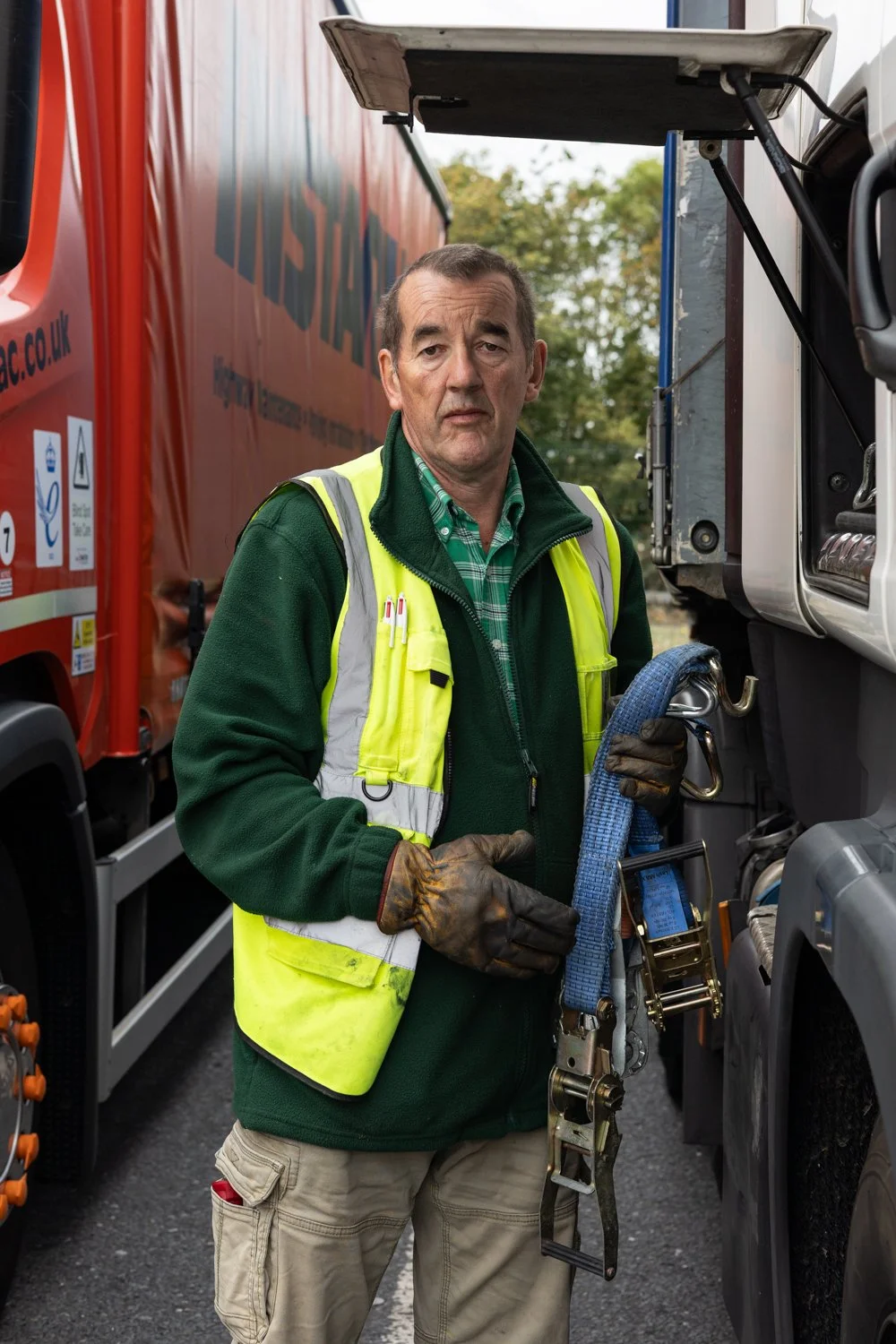
Patrick Benham-Crosswell
Photo credit: Melanie Pollard
-
![]()
Laura Rose
Photo credit: Holly Revell
-
![]()
Emma Williams
Photo credit: Holly Revell
-
![]()
Patrick Benham-Crosswell
Photo Credit: Melanie Pollard
-
![]()
Brian Pollard
Photo credit: Melanie Pollard
-
![]()
Emma Foster-Smith
Photo credit: Melanie Pollard